PEN eNews 4(5) February 2015
PEN eNews is a monthly e-newsletter shared with the global PEN Community and created to help dietitians position themselves as leaders in evidence-based nutrition practice. In addition, users of the PEN System will find articles on the new evidence, resources and features available and how to maximize one's use of PEN.
February 2015 · Volume 4, Issue 5
Milestone birthday celebrations
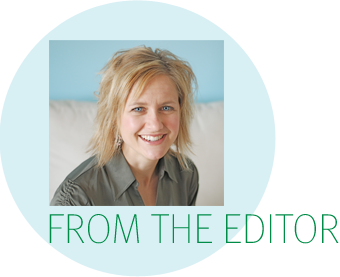
This past November, I celebrated a milestone birthday. While I don’t especially love the fact that I have hit this milestone, I did have fun celebrating with family and friends by hiring a chef to cater an in-home cocktail party featuring a variety of delectable appetizers. Each time I celebrate a birthday, I think about this sentiment: “Add life to your years, not years to your life.” I use this as a guidepost in my life because it represents a beacon of hope for a bright and positive future. It helps me reframe how I think about having yet another birthday, but more importantly, it reminds me that, like a fine wine, I can get better with age.
 It has been said that a woman should never reveal her age so I'll leave that to your imagination. However, this year, PEN® will reach a milestone. We are shouting out loud and proud that PEN® turns 10 years old this September! In lead up to this PEN@10 milestone, we have created a PEN® Community webpage where we launch our storyboard video which shares our story of how we have grown to become a global resource for nutrition practice. What did we look like 10 years ago? We will post PEN® archives so you can see how PEN® has grown and developed. We will also share stories of how dietitians have been impacted by evidence-based dietetic practice. We are proud of the “life” we have added to our years, and hope you will join us in celebrating this PEN@10 milestone birthday.
 In this issue of PEN eNews 4(5), we showcase examples of how dietitians are translating evidence-based recommendations into practical guidance. Are plant-based beverages suitable for infants? describes recently published data on infants consuming plant-based beverages and outlines when these beverages can be safely introduced. Using evidence to answer popular questions - all in a days work as a media spokesperson profiles UK dietitian Gemma Sampson (formerly Critchley) and her advice for dietitians engaging in media relations. Australia’s Healthy Weight Week profiles dietitians as the experts in weight loss and healthy eating advice highlights an exciting advocacy campaign occurring this month, including new factsheets, a cookbook, social media toolkit and a Twitter Chat. All this and more in eNews 4(5).
Kristyn Hall MSc, RD
Editor, PEN® eNews
PEN® eNews may contain links to other external websites. PENnutrition.com is not responsible for the privacy practices or the content of such external websites. Dietitians of Canada, Dietitians Association of Australia, Dietitians New Zealand and The British Dietetic Association do not endorse the content, products or services on other websites.
Welcome to the Association for Dietetics in South Africa
 Welkom! The PEN® Global team would like to welcome the Association for Dietetics in South Africa in joining the Practice-based Evidence in Nutrition® Community!
 DAA Fellow awarded Member of the Order of Australia
The Dietitians Association of Australia (DAA) is extremely proud of one of our esteemed members, Professor Linda Tapsell AM who was announced as a Member of the Order of Australia (AM) on Australia Day, 26 January 2015. Linda received the AM for her outstanding service and dedication to Australian Nutrition and Dietetics; in dietetic education and training, the development of professional competency standards, basic and applied nutrition and dietetic research, national nutrition policy development and publication and editorial leadership.
 She spent the first 14 years of her career in hospital clinics and public health before she moved into research, where she has written more than 200 scientific publications while editing journals and chairing various research committees. Linda was appointed a Fellow of DAA in 2005 and previously received an Outstanding Contribution Award. In 2012 she was awarded Honorary Life Membership of DAA. To receive an AM is a wonderful achievement and well-deserved.
“I was not expecting this, but then I thought of the privilege and how kind people can be. This is a real honour and I am very grateful for the recognition” said Linda.
DAA was delighted to make the nomination and congratulates Linda!
Emma Jones APD
Communications Dietitian, Dietitians Association of Australia
How do I…find alerts on PEN®?

Timely alerts and recalls are released from government agencies in Australia, Canada, New Zealand and the U.K. regarding food recalls and health risks. Did you know that timely alerts and recalls are posted in the PEN® knowledge database? There are two places one can access alerts and recalls information:

The PEN® Team receives the Canadian alerts from the Canadian Food Inspection Agency (CFIA) and immediately posts nationwide alerts on the website to warn users about items to be aware of. We are evaluating the process for adding nationwide alerts from our partner countries.


- Australia: sign up for email notifications from Food Standards Australia New Zealand.
- Canada: sign up for email notifications from the Canadian Food Inspection Agency website.
- New Zealand - sign up for email notifications from the Ministry for Primary Industries
- U.K.- sign up for email notifications from the U.K. Food Standards Agency
Using evidence to answer popular questions - all in a days work as a media spokesperson
How often can you eat chocolate? Is birch water the next coconut water? Should everyone be eating Paleo? How can you make Christmas healthier? These are typical questions circulated amongst the British Dietetic Association (BDA) media spokesperson team waiting for comment from a dietitian.
Being involved in media relations is time-consuming - why do you do it?
 It’s fun! I’ve found that being a media spokesperson really challenges me to stay up-to-date with current nutrition trends, what’s popular and what people are eating and talking about. It’s a good way to stay on my toes as well ensuring my practice is up-to-date. Plus, all that research into the health benefits of the latest ‘superfood’ counts towards continuing professional development (CPD).
What advice do you have for dietitians engaging in media relations?
Establishing strong relationships with journalists are important, because if you are reliable and can provide accurate information within a timely manner they are likely to ask you again. I’ve been approached a number of times this year by freelance journalists working on behalf of leading UK women’s magazines and Tesco Living to comment on pieces they are working with. It doesn’t always end up in print, but it’s establishing those relationships that are important. If they aren’t getting advice from dietitians, they will ask someone else. On a positive note I’m discovering that a number of journalists are actively seeking dietitian out and are now looking for nutrition advice that has solid scientific evidence behind it which is very reassuring.
How do you create a message that is evidence-based while also media-friendly?
One of the first things I do when I have a media request is to check whether there are any reviews on PEN® relating to the topic of interest. The knowledge pathways and questions are great for quickly finding high quality research on a given topic that can form the basis of my message. I’ll always have key points that I aim to get across with research & references to back them up (if asked). The BDA Food Facts are also great resources and tools to refer to.
Getting straight to the point is key, but doing so in an interesting an engaging way that is approachable and realistic. Knowing your target audience is also important, as that will influence your language and the phrases you might use during an interview or within comments. If it’s a phone interview I’ll also prepare notes on related topics as there is a tendency to get thrown curve balls to try to catch you off guard.
Why do you think it’s important for dietitians to be active within the media?
We live in a media-savvy society where people turn to Google and online bloggers for their standard nutrition and health advice. Many people are still unsure of the differences between dietitians, nutritionists or nutrition experts leaving wide gaps in the quality of information out there. By getting involved as dietitians on social media and engaging with journalists and media in all its formats we can further promote our profession and address inaccurate advice.
If you are thinking of getting involved in social media, there are some great resources with the BDA, or DAA on dietitians within social media, within PEN on social media and media relations as well as regular training workshops which I’d thoroughly recommend.
Written by Gemma Sampson (formerly Critchley), RD, APD, MSc PHN
Senior R&D Dietitian Vitaflo International & BDA Media Spokesperson
www.dietitianwithoutborders.com
@dietnoborders
An international dietetic exchange program prepares future dietitians for culturally competent practice and dietetics
While the language of evidence is universal, how evidence is applied to practice can be different. An international exchange program between Wayo Women’s University (WWU) located in Japan and Brescia University College (BUC), located in Canada, provides an experience where students from each university can begin to learn about these differences.

Wayo Women's University, Japan
Both WWU and BUC are all-women universities that work to empower their students to prepare them to be leaders in their chosen careers. The program began with a dream between myself and a dietitian friend working in Canada, to help students learn about leadership and diversity in practice settings. My friend introduced me to BUC; following discussions among the department heads at each university a Memorandum of Academic Cooperation agreement was signed and the program officially began in 2012!
Reiko Sugiura, PhD. RD.
Wayo Women’s University
r-sugiura@wayo.ac.jp
More information about the program: http://brescia.uwo.ca/life/international-experiences/
Knowledge Transfer Events and Resources
Articles:
- Televised medical talk shows – what they recommend and the evidence to support their recommendations: a prospective observational study. Korownyk C, Kolber MR, McCormack J, Lam V, Overbo K, Cotton C, et al. Televised medical talk shows – what they recommend and the evidence to support their recommendations: a prospective observational study. BMJ. 2014 Dec 17;349. Available from: http://www.ncbi.nlm.nih.gov/pubmed/25520234
- Detox diets for toxin elimination and weight management: a critical review of the evidence. Klein AV1, Kiat H. Detox diets for toxin elimination and weight management: a critical review of the evidence. J Hum Nutr Diet. 2014 Dec 18. http://www.ncbi.nlm.nih.gov/pubmed/25522674
- Social media in public health. National Collaborating Centre for Healthy Public Policy. Social Media in Public Health. January 2015. Available from: http://www.ncchpp.ca/docs/2015_TC_KT_SocialMediaPH_en.pdf
Videos:
- Understanding what a P value tells us. By the National Collaborating Centre for Methods and Tools. Available from http://www.nccmt.ca/resources/multimedia-eng.html#
- What are Fixed Effects? What is problem-centered interviewing, what is qualitative interviewing? What is crowdsourcing? http://www.ncrm.ac.uk/resources/video/RMF2014/whatis.php
- Research Methods Festival 2014 filmed sessions, from the 6th ESRC Research Methods Festival 2014. http://www.ncrm.ac.uk/resources/video/RMF2014/filmed.php
PEN® eNews may contain links to other external websites. PENnutrition.com is not responsible for the privacy practices or the content of such external websites. Dietitians of Canada, Dietitians Association of Australia, Dietitians New Zealand and The British Dietetic Association do not endorse the content, products or services on other websites.
Contact Us


To access current and archived copies of PEN eNews, go to: http://www.pennutrition.com/enews
Do you have comments, questions or feedback? Please contact us:
Jayne Thirsk RD, PhD, FDC
Director of PEN®
Dietitians of Canada
jayne.thirsk@dietitians.ca
Sue Kellie MSc
Deputy Chief Executive
British Dietetic Association
globalpen@bda.uk.com
Kristy Bartlett APD
Professional Services Dietitian
Dietitians Association of Australia
psd@daa.asn.au
Kristyn Hall RD, MSc
Editor of PEN® eNews
Dietitians of Canada
eNews@pennutrition.com
 February 2015 ·
Volume 4
(5)
February 2015 ·
Volume 4
(5)
A Publication of the PEN System Global Partners,
a collaborative partnership between International Dietetic Associations.
Copyright Dietitians of Canada. All Rights Reserved.